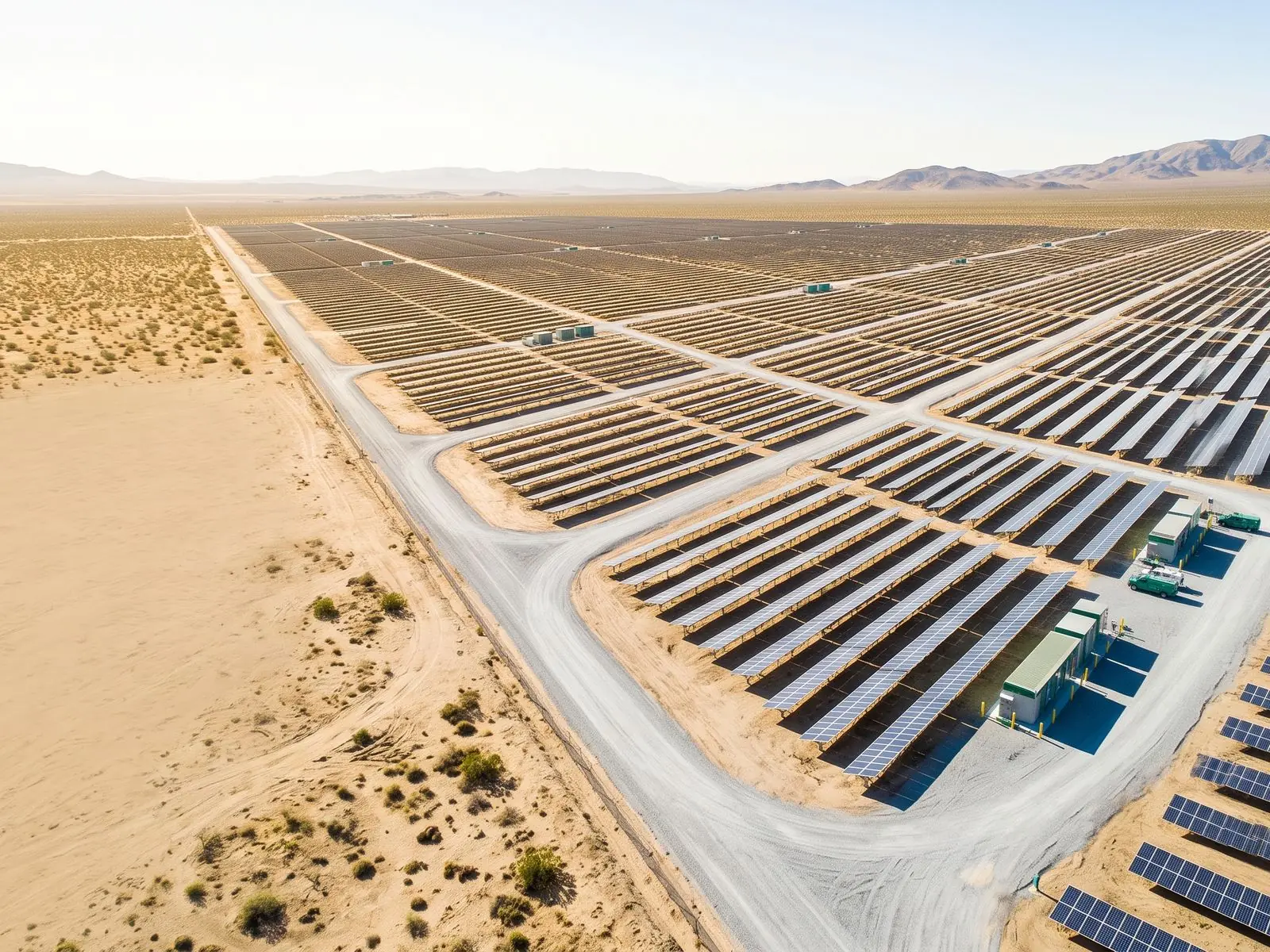
Engineering-first approach
Every system is designed for your roof and your load curve — shadow analysis, structural assessment and yield modelling before a single component is specified. Never a catalogue picked off a price list.

Residential · Commercial · Industrial Solar EPC
Jaipur, go solar — save up to 95% on electricity bills, with up to ₹78,000 PM Surya Ghar subsidy support.
Dvaitam delivers residential, commercial and industrial solar installation across Rajasthan — complete subsidy application support on the official portal, Tier-1 equipment, and end-to-end EPC execution from site survey to documented handover.
Plan in ten seconds
Tap your average monthly bill. See the rooftop system that fits it, what the government pays back, and when it pays for itself — before you talk to anyone.
No EMI gimmicks, no “zero investment” asterisks. The subsidy is a government reimbursement after commissioning, and every number here is modelled conservatively — flat tariff, Jaipur sunshine, soiling losses included.
Got questions?
A Jaipur engineer picks up — not a call centre.
Your average monthly bill
Installed cost ₹1.70 L–₹2.15 L → ₹92,000–₹1.37 L after subsidy · needs ~225 sq ft of shade-free roof
Indicative for a Jaipur home at ₹7/unit on an RCC roof. Your roof, shading and sanctioned load set the real numbers — which is what the free survey is for.
Why choose Dvaitam
Solar is a twenty-five year asset usually bought on a single afternoon's information. These six things decide whether it performs for all twenty-five — and each one is a deliberate part of how we work.
Every system is designed for your roof and your load curve — shadow analysis, structural assessment and yield modelling before a single component is specified. Never a catalogue picked off a price list.
Site survey, design, procurement, installation, net metering, testing and commissioning under one scope. The team that models the generation is the team that signs the commissioning report.
Site survey scheduled within 24 hours of your enquiry, and a residential installation completed in two to four days on site once approvals are through.
PM Surya Ghar portal registration, feasibility, vendor formalities, net metering and inspection — filed, chased and followed through until the subsidy is credited to your bank account.
ALMM-listed modules, BIS-certified balance of system, and inverters, structures and protection devices chosen against the engineering rather than the margin.
Monitoring configured at handover, a documented O&M pack, and a maintenance relationship that makes underperformance visible before it shows on your bill.
Warranty coverage
Most installers hand you a folder of manufacturer certificates and step back. Dvaitam carries single-point responsibility for the complete installation — so when something fails, you make one call and we deal with the manufacturer, not you.
| Component | Warranty term | Backed by | What Dvaitam takes on |
|---|---|---|---|
| Solar panels | 25-year performance, 12-year product | Manufacturer | We register the warranty, hold the documentation and handle any claim on your behalf. |
| Solar inverter | 5–10 years, extendable | Manufacturer | Brand selected for in-state service support, not just price. We manage replacement and reconfiguration. |
| Mounting structure | 5 years | Dvaitam | Structure is engineered for local wind loading and corrosion conditions, so this is our own liability. |
| Installation workmanship | 5 years | Dvaitam | Fixings, waterproofing, cable routing and terminations — the failures nobody else takes ownership of. |
| Electrical components | 2 years | Dvaitam + manufacturer | Cables, protection devices, earthing and combiner boxes covered as a system, not component by component. |
| Service support | Free first-year service, AMC thereafter | Dvaitam | Scheduled inspection, monitoring review and a performance check against the commissioning baseline. |
The difference
Single point of warranty responsibility
One contract, one number to call, one party accountable for the whole system — including the joins between components, which is exactly where responsibility usually disappears.
When an array underperforms, the module maker blames the installation, the installer blames the inverter, and the inverter brand asks for test data nobody recorded. Under a single-point EPC scope that argument cannot start: we hold the commissioning measurements, we specified the components, and the obligation is ours to resolve.
Warranty terms are as set out in your signed contract, and all warranties carry standard exclusions — physical damage, unauthorised modification, and force majeure among them. Ask us for the full terms before you sign; we will send them unprompted.
What makes us different
This is not a comparison against any particular company — it is a comparison against the way rooftop solar is usually sold in this market: a per-watt price, a module brand, and everything else left undefined.
| What is actually included | Dvaitam | Typical installer |
|---|---|---|
| Engineering designStructural assessment, shadow analysis and single line diagrams before quoting | Included | Not included |
| Energy yield optimisationCapacity sized from twelve months of consumption, not from roof area | Included | Not included |
| PM Surya Ghar supportPortal application, feasibility, inspection and follow-through to subsidy credit | Included | Sometimes |
| Dedicated project managerOne named contact from survey to handover | Included | Not included |
| Tier-1 componentsALMM-listed modules and BIS-certified balance of system, specified not substituted | Included | Sometimes |
| Complete EPC executionDesign, supply, civil, electrical, testing and commissioning in one scope | Included | Sometimes |
| Documented commissioningMeasured test results, as-builts and a performance baseline — not a switch-on | Included | Not included |
| Long-term serviceMonitoring, scheduled maintenance and a documented O&M pack | Included | Sometimes |
Every row above is a scope commitment rather than a slogan. About Dvaitam sets out who delivers it, and our process shows the stage each item is signed off at.
The Dvaitam way
Five principles behind every system we deliver — from a 3 kW home rooftop to a captive industrial plant.
Every quote follows a physical site survey — structure, shading, sanctioned load — never a per-kW rate card.
Systems sized to your consumption and load curve, not to the maximum panels the roof could hold.
Based in Jaipur, serving all of Rajasthan — same-city surveys, service calls and DISCOM liaison.
One contract and single-point warranty responsibility — engineering, supply, installation, paperwork, after-sales.
ALMM-listed modules, BIS-certified components and measured commissioning baselines, built for twenty-five Jaipur summers.
Our EPC process
Six stages from first call to a working net meter. The installation itself is the fastest part — most of the calendar is DISCOM process, and running it properly is most of what you are paying for.
Same day
We read your last electricity bill, confirm your DISCOM and sanctioned load, and tell you honestly whether solar makes sense on your property.
Within 24 hours
Roof measurement, structural check and a seasonal shadow analysis on site — the winter sun path, which is what actually governs a layout.
2–3 days
Capacity modelled against your consumption, single line diagram, mounting design, generation estimate with assumptions stated, and a fixed scope and price.
2–6 weeks
PM Surya Ghar portal application, DISCOM feasibility approval and net-meter application filed and chased. This is where most of the calendar time goes.
2–4 days on site
Structure, modules, DC, inverter, AC, protection and earthing — installed to method statements with quality records captured as the work proceeds.
1–2 weeks
DISCOM inspection, net meter energised, measured commissioning tests, monitoring configured and a documented handover pack issued.
The same six stages in more depth, including what is handed over at each one, is on our project delivery process page.
Our solar solutions
The same engineering standard applied to three very different problems — a family home offsetting a summer bill, a hotel displacing units at commercial tariff, and a factory building captive generation.
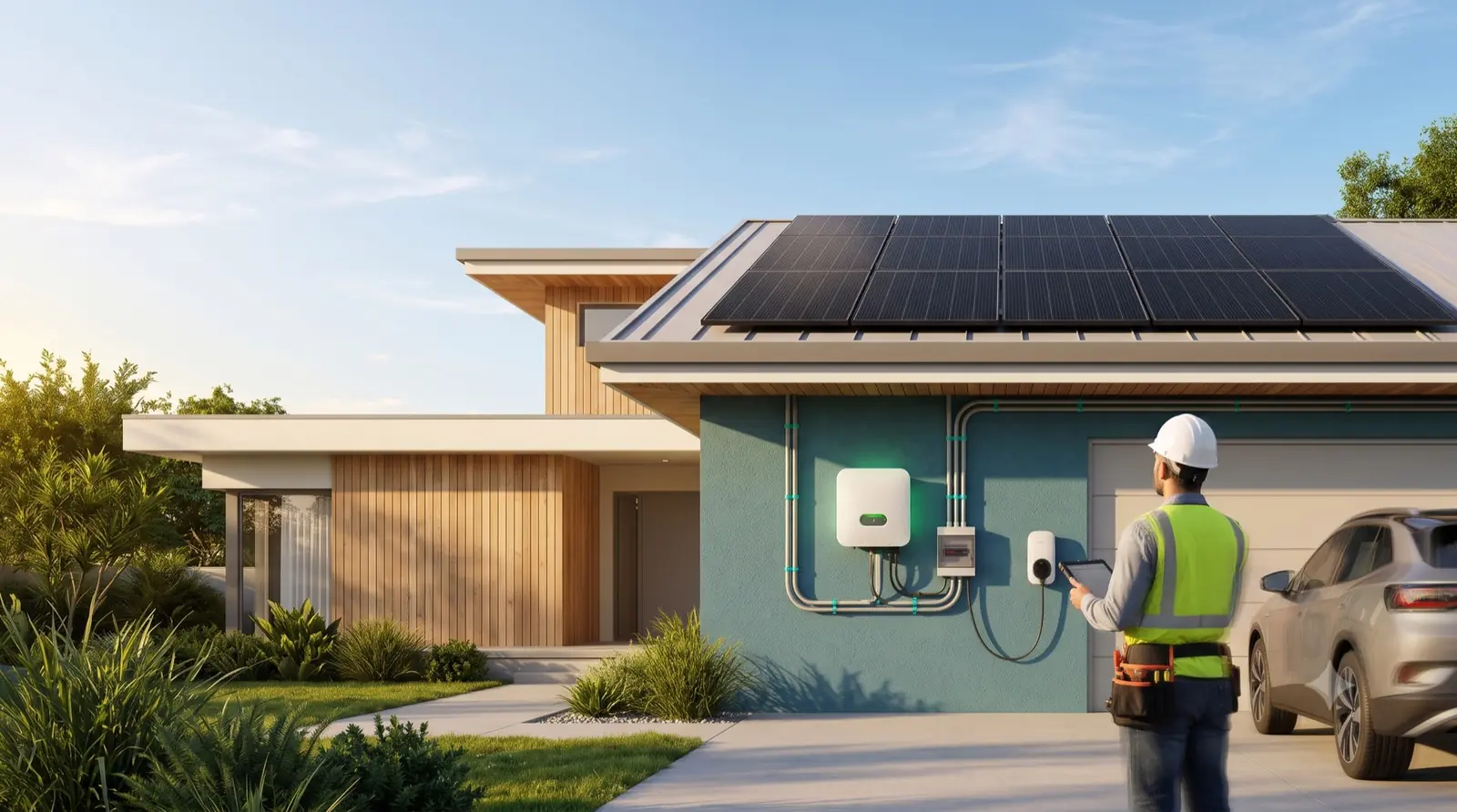 1 kW – 10 kW
Rooftop solar for homes, sized against your consumption and sanctioned load, with complete support for your subsidy claim on the official portal.
Up to ₹78,000 PM Surya Ghar subsidy
Explore residential solar in Jaipur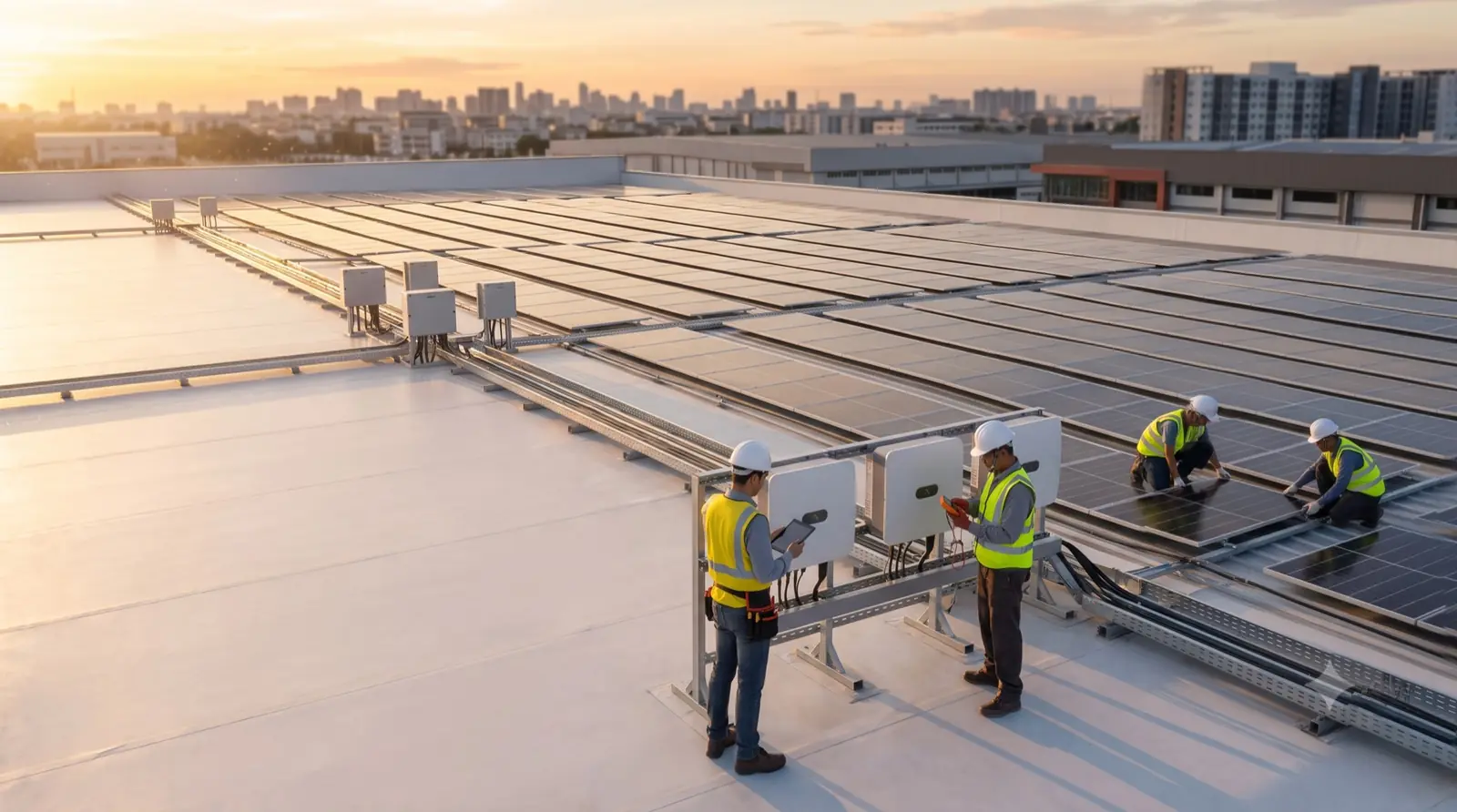 15 kW – 100 kW
Solar for buildings that consume through daylight hours, where a commercial tariff makes every self-consumed unit worth more.
Accelerated depreciation available
Explore commercial solar in Jaipur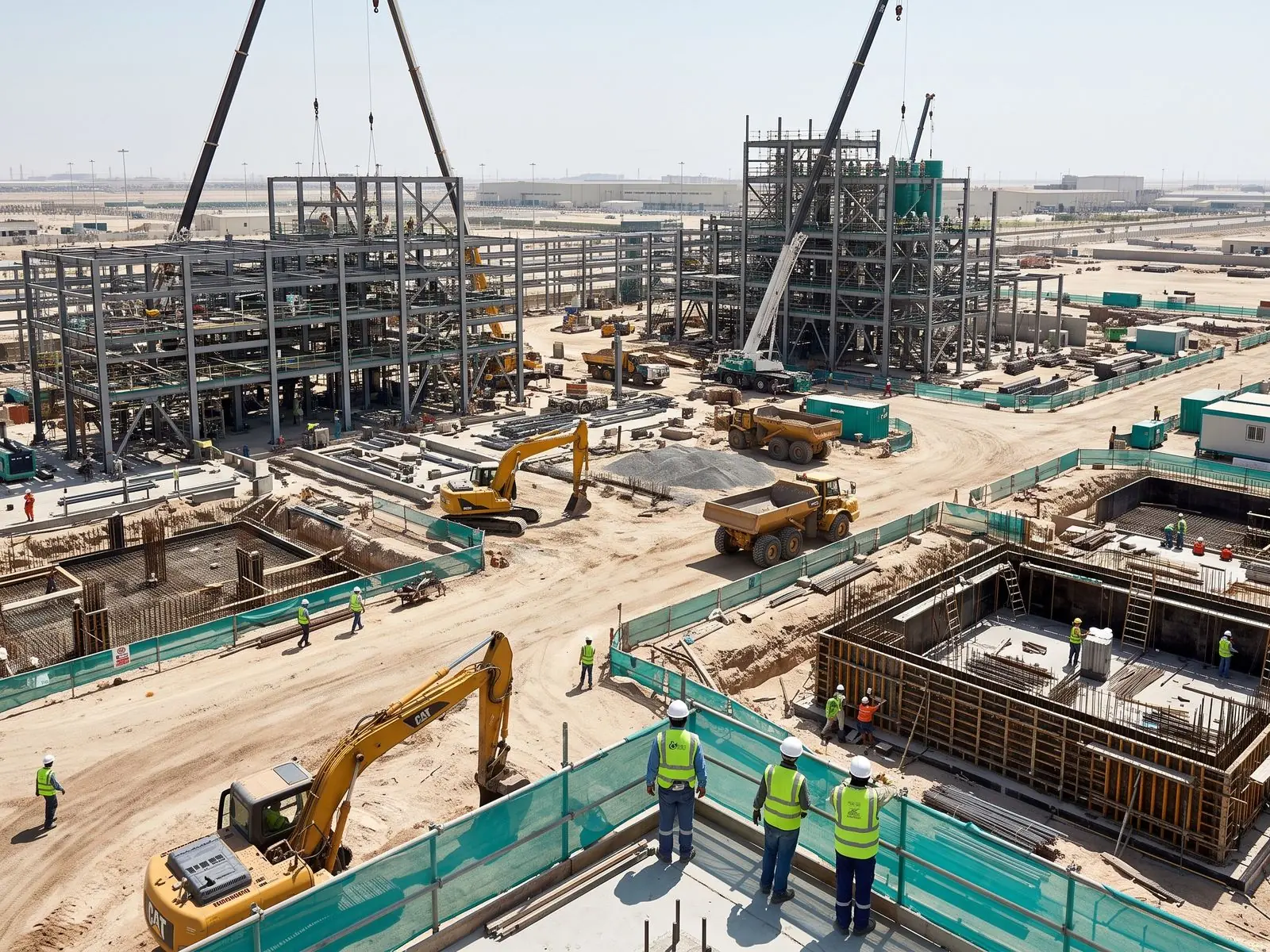 100 kW – multi-MW
Turnkey EPC for manufacturing sites — structural assessment, LT/HT connection design, protection coordination and documented commissioning.
Captive & open access options modelled
Explore industrial solar for factoriesEach of these splits further by sector — the load profile of a hotel is nothing like a cold store or a school. See the industries we serve for what changes by building type.
Solar calculator
Move the slider to your average monthly electricity bill and the model sizes the system, prices it, applies the subsidy you may qualify for and works out the payback. The tariff is held flat across all twenty-five years — no assumed price rises inflating the numbers.
₹5,000per month
₹500 to ₹2,00,000 · about 714 units a month at ₹7 a unit
Standard ballasted or bolted mounting
Indicative estimate, not a quotation. Costs are planning bands confirmed only after a site survey; generation assumes a clean, unshaded array and is derated for soiling; savings are capped at 95% of your bill because fixed charges and meter rent remain; and the 25-year figure applies module degradation and provisions one inverter replacement. Subsidy follows PM Surya Ghar as currently notified — verify on the official government portal, pmsuryaghar.gov.in. Dvaitam does not represent any government entity.
Prefer to compare fixed capacities? See every system size from 1 kW to 100 kW, or check what you can claim under the PM Surya Ghar subsidy scheme.
Solar benefits
Six numbers that decide whether solar is worth it on your property — stated with the assumptions attached, because a benefit without its assumptions is a slogan.
Up to 95%
A correctly sized system with net metering offsets the large majority of your annual consumption. Fixed charges remain, which is why we say 'up to' and model your actual bill rather than a slogan.
₹78,000
PM Surya Ghar pays ₹30,000 per kW for the first 2 kW and ₹18,000 for the third, capped at ₹78,000 for residential systems of 3 kW and above.
25+ years
Modules are typically warranted to deliver 80–90% of rated output at year 25, and keep generating beyond it at a gradually declining rate.
3–5 years
After that, generation is effectively free. Every tariff increase shortens the payback further — which is why we model at a flat tariff as the conservative case.
Hedged
Electricity you generate is insulated from tariff revisions. The larger the share of your consumption you cover, the less exposed you are.
~20 t
A 5 kW rooftop system generating 8,000 units a year displaces roughly 20 tonnes of CO₂ over 25 years on the Indian grid emission factor.
Premium components
Equipment selection follows the engineering, not the margin. Modules are chosen on temperature coefficient and degradation, inverters on MPPT configuration, loading ratio and whether the brand is actually serviced in Rajasthan.
ALMM-listed modules, required for any PM Surya Ghar claim
Selected for efficiency, MPPT configuration and in-state service support
Brand names are listed to show the tier of equipment we specify and install. Availability varies by project and by what is ALMM-listed at the time of order — the final make and model is confirmed in your proposal, and we do not substitute after contract without telling you.
More on how components are specified and procured on our solar equipment supply page.
PM Surya Ghar: Muft Bijli Yojana
The central government pays up to ₹78,000 of your rooftop solar cost directly into your bank account. Dvaitam supports your whole claim on the official government portal — registration, feasibility, installation to scheme specification, net metering, inspection and the follow-through until the money lands.
The subsidy is a reimbursement, not a discount — you fund the system and the money returns after commissioning. Anyone quoting a price “after subsidy” at the point of sale is describing the process inaccurately.
Official scheme portal: www.pmsuryaghar.gov.in. Dvaitam is a private company and does not represent any government entity.
Service areas
Twelve cities and three distribution companies. Each city page covers the local net-metering process, the site conditions that drive design decisions there, and what a system actually generates.
No obligation, no cost
Solar is a twenty-five year decision made on a single afternoon's information. Before you commit to a system in Jaipur, we will give you the numbers to decide with — and tell you if the answer is that solar is not worth it on your roof.
A conversation with an engineer, not a salesperson — what your roof and your load can actually support.
Roof measurement, structural check and a seasonal shadow analysis carried out at your property.
Your last twelve months of bills modelled against real generation figures for your location.
Payback period, lifetime savings and the honest sensitivities — including what happens if tariffs stay flat.
What you may qualify for under PM Surya Ghar, and what the net cost is after it lands.
Solar guides
Straight answers on subsidy, cost, sizing and maintenance — written by the engineers who install these systems, with the assumptions stated.
Judge a solar company in Jaipur on four things rather than on price per watt: whether they survey the roof and read twelve months of your bills before quoting a capacity; whether they file the JVVNL net-metering application and the PM Surya Ghar subsidy claim for you; whether the equipment is ALMM-listed and BIS-certified as the scheme requires; and whether commissioning produces measured test results and documentation rather than a switch-on. Dvaitam does all four as standard, under one accountable scope from design to handover.
Indicatively ₹55,000 to ₹85,000 per kW for residential systems, falling per kilowatt as capacity rises. A 3 kW system runs about ₹1.7–2.15 lakh before the ₹78,000 PM Surya Ghar subsidy, netting out near ₹1 lakh. A 5 kW system runs about ₹2.7–3.4 lakh before subsidy. Commercial and industrial plants price considerably lower per kW at scale. Every figure is confirmed after a site survey, because roof type, structure and cable runs genuinely move it.
Up to ₹78,000 under PM Surya Ghar: Muft Bijli Yojana. The scheme pays ₹30,000 per kW for the first 2 kW and ₹18,000 for the third, capping at ₹78,000 for any residential system of 3 kW or above. It applies to domestic connections only — commercial and industrial consumers are not eligible, though their case usually stands on displacing units at a higher tariff.
Four conditions must be met together: you are an Indian citizen, you own the house where the system is installed, the household has a valid electricity connection with JVVNL, AVVNL or JdVVNL, and you have not already claimed another central solar subsidy on that connection. The scheme covers domestic connections only — a shop, guest house or factory does not qualify even if a family lives above it.
About 1,550 to 1,650 units per installed kilowatt per year for a clean, unshaded, correctly designed array. That means roughly 4,800 units a year from a 3 kW system and 8,000 from a 5 kW system. Western Rajasthan — Jodhpur and Bikaner — generates 8 to 9% more; Udaipur and Kota slightly less. Dust matters: an uncleaned array in Jaipur can lose 8 to 15% of its output.
The physical installation of a residential system takes two to four days. The full timeline from order to a working net meter is normally six to ten weeks, and nearly all of that is DISCOM process time — feasibility approval, net-meter sanction and inspection scheduling — rather than work on your roof. Commercial and industrial projects typically run eight to twelve weeks or longer.
A correctly sized system with net metering can offset the large majority of your annual consumption, and bills falling by 80–95% are common where the capacity matches the load. It is never 100%: fixed charges, meter rent and any consumption beyond what the system generates remain. We model your actual bill and show what the residual looks like rather than quoting a headline percentage.
Work from annual consumption, which is printed on your bill, not from roof area. Each installed kilowatt generates roughly 1,600 units a year in Jaipur, so annual units divided by 1,600 gives the capacity that would fully offset your usage. A home using 5,000 units a year needs about 3 kW; one using 8,000 needs about 5 kW. Sanctioned load and available shade-free roof then confirm whether that capacity is achievable.
Roughly 70 to 80 sq ft per kilowatt, including the row spacing needed to avoid winter self-shading and enough walkway space to clean the modules. So about 220 sq ft for 3 kW, 350 sq ft for 5 kW and 700 sq ft for 10 kW. Only genuinely shade-free area counts, which on most Jaipur plots is less than the terrace looks once the mumty, water tanks and neighbouring construction are excluded.
A net meter records import and export separately, and you are billed on the net position. The process runs through your DISCOM — JVVNL, AVVNL or JdVVNL depending on location — as a feasibility application, sanctioned-load verification, installation by a registered vendor, net-meter application, inspection and commissioning certificate. Permitted capacity is tied to your sanctioned load, which is the most common reason an application is returned.
JVVNL covers Jaipur, Chomu, Shahpura, Alwar, Kota, Dausa, Bharatpur and Tonk. AVVNL covers Ajmer, Kishangarh, Sikar, Neem Ka Thana, Jhunjhunu, Bhilwara, Nagaur and Udaipur. JdVVNL covers Jodhpur, Bikaner, Barmer, Jaisalmer, Pali, Churu, Ganganagar and Hanumangarh. Each runs its own process and forms — filing under the wrong one costs weeks. We confirm it from your bill before anything is submitted.
Not if it is a standard grid-tied system. Grid-tied inverters are required by regulation to shut down when the grid fails, for the safety of anyone working on the line. If you need generation during outages — which matters more in rural and semi-urban areas than in central Jaipur — the answer is a hybrid system with battery storage covering essential circuits. It costs meaningfully more, and we will tell you honestly whether your supply justifies it.
Cleaning is the main thing, and the interval depends on where you are: every two to four weeks in Jaipur through the dry months, more often in quarry, agricultural or desert belts, and promptly after any dust storm. Annually, connections should be thermographically scanned under load, insulation resistance and earth continuity retested against the commissioning baseline, and the inverter serviced at manufacturer intervals.
For a residential system with the PM Surya Ghar subsidy, three to five years is normal in Rajasthan. For a commercial or industrial system with strong daytime self-consumption, three to four and a half years is typical before accelerated depreciation is taken into account. We model payback at a flat tariff — a projection that only works if electricity prices rise is a sales device, not an analysis.
Usually yes, and often more so than residential. Commercial tariffs run well above domestic rates, so each displaced unit is worth more, business consumption generally lines up with generation hours, and accelerated depreciation improves the post-tax position for a profit-making entity. Together those typically beat the ₹78,000 residential subsidy within the first two years.
Structural survey and any reinforcement design, load flow and protection coordination against your existing installation, detailed design with single line diagrams and cable schedules, procurement against specification, construction to method statements, a tie-in planned around your production shutdown window, and commissioning with measured results, as-built drawings, an O&M pack and a performance baseline.
Yes, and it is common — but only after the structure is assessed. Purlin spacing, section capacity, sheet condition and existing loads decide what an array can weigh and where it can sit. We survey before drawing a layout and design reinforcement where it is needed. Where a site has spare land, a ground-mounted plant is often the better engineering answer, and we will say so.
ALMM-listed modules from established manufacturers — Adani Solar, Waaree, Tata Power Solar, Vikram Solar and RenewSys among them — and inverters from brands including Sungrow, Growatt, Solis, SMA and Fronius. Selection follows the engineering: temperature coefficient and degradation for modules, and MPPT configuration, loading ratio and in-state service support for inverters.
Yes, across Rajasthan — Chomu, Govindgarh, Shahpura, Neem Ka Thana, Sikar, Alwar and its industrial belt at Bhiwadi and Neemrana, Ajmer and Kishangarh, Jodhpur, Kota, Udaipur and Bikaner. Each falls under a different distribution company with its own net-metering process, and we file under the correct one. Where a site sits outside our service area we say so at enquiry stage rather than stretching to cover it.
Your last electricity bill — ideally twelve months of them — and a photo of the roof. That is enough for an indicative capacity, generation estimate and subsidy position. A firm price follows a free site survey, because roof type, structure, mounting height and cable run length genuinely move the number and cannot be guessed from a photograph.
Send us your last electricity bill and a photo of your roof. We will come back with the right system size, what it will generate at your location, the subsidy you may qualify for and a realistic payback — free, and with no obligation to proceed.